Simple Strength & Balance Moves For Easier Camping After 50
Pitching the tent, carrying the boxes, getting up off the ground and sleeping through a chilly night all play a role in determining how much you enjoy a camping trip. Every one of them relies on having a bit of strength, balance and of course, a decent night’s sleep. The good news is that none of that needs a gym, just ten minutes at home, a couple of times a week can help. Read on to find out more.
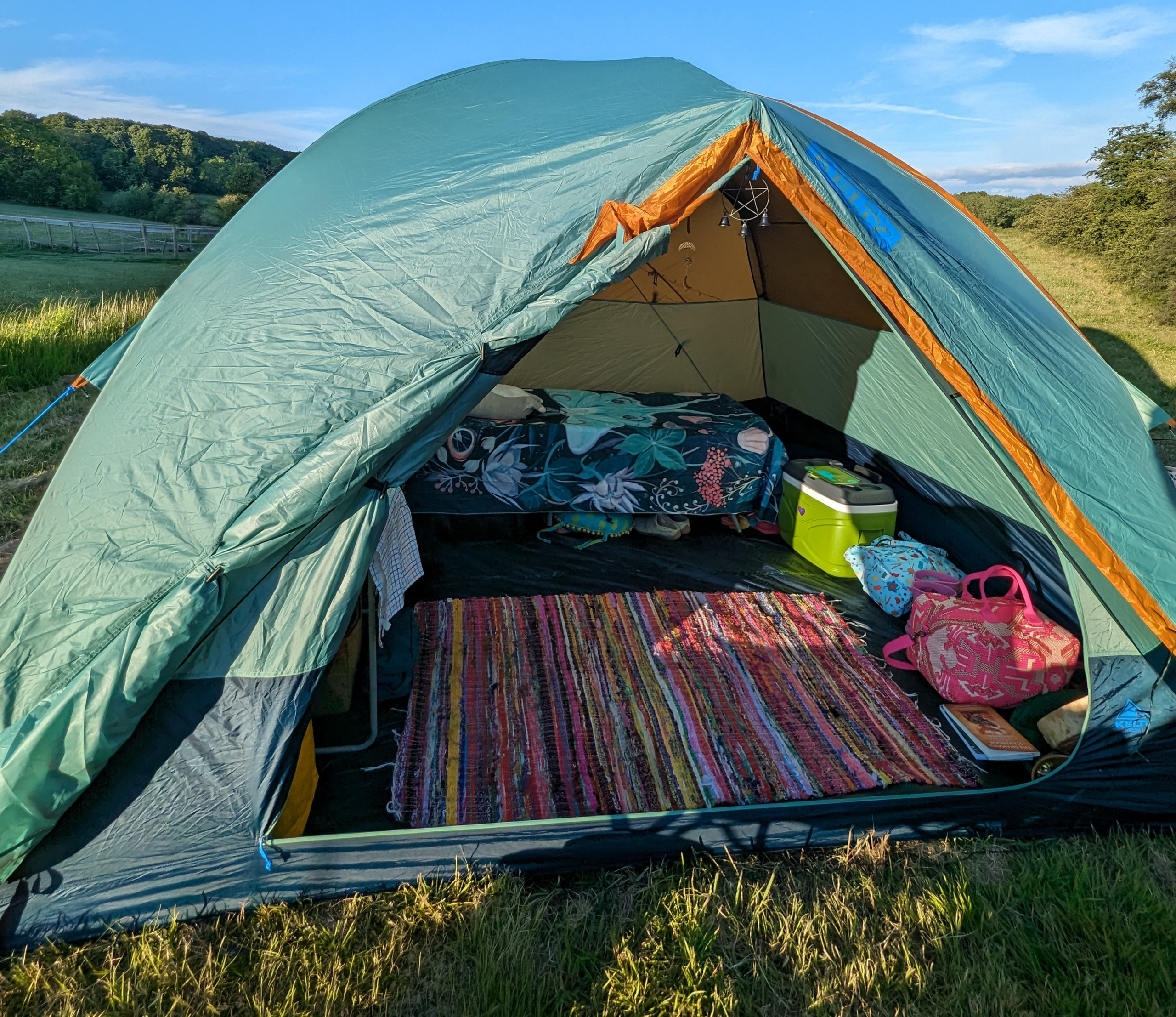
Anyone who read my Kelty Wireless 6 review will know that at 168cm I am, apparently, not tall enough to wrangle a 190cm tent without a degree of physical comedy, and that getting the fly sheet over the top involves what I can only describe as interpretive dance. Has the tent grown? Not a bit, and neither have I. Four years on, the fly sheet still gets the full performance, and now I’m the far side of 50 I think it’s fair to say I’m not alone in wanting a bit more spring in the throw.
Honestly, most of the comfort side I’ve sorted with kit. My folding camp trolley turned the unloading job into two trips instead of eight, and a raised camp bed means getting in and out of bed isn’t a floor exercise. A hot water bottle goes on every trip because I’d rather be too warm than too cold! That’s the kit side of things. The body doing the throwing, lifting, standing and sleeping is the other side, and whilst it’s less fun to shop for, it’s genuinely the more fixable of the two.
Why the same jobs can feel harder as we get older
In one study of 100 healthy people aged 65 to 89, the everyday tests included a timed rise from a low chair, lifting a weighted bag on to a surface and stepping up on to boxes, which, for reference, is a fairly complete description of setting up camp. Across that age range, strength was lower by the equivalent of 1 to 2% a year, and leg power, the quick kind of strength that also hoicks a fly sheet over a dome, by roughly 3.5% a year. Power is the one the throw runs on, which explains a lot.
This is also the least stubborn part of getting older. A Cochrane review of 121 trials found that progressive strength training had a large positive effect on muscle strength in older people and a moderate to large effect on getting out of a chair, and in most of those trials people trained two or three times a week and worked fairly hard when they did. The NHS asks the same of all of us, strengthening activities on at least 2 days a week, and its list of what counts includes carrying heavy shopping bags, yoga and pilates. A cool box full of ice counts too, I’d argue.

Pitching, reach and a short sharp push
Getting a fly sheet over a 190cm peak is mostly reach and a short sharp push, with feet that stay put on a lumpy pitch. Two quick moves at the kitchen worktop do the job. An overhead press with a full water bottle in each hand (or your weights, if you have a pair gathering dust), 8 to 10 slow reps, and press-ups with your hands on the worktop, which is much kinder than the floor. Those steady feet come from the balance bit further down.
Carrying, or why the trolley only does half the job
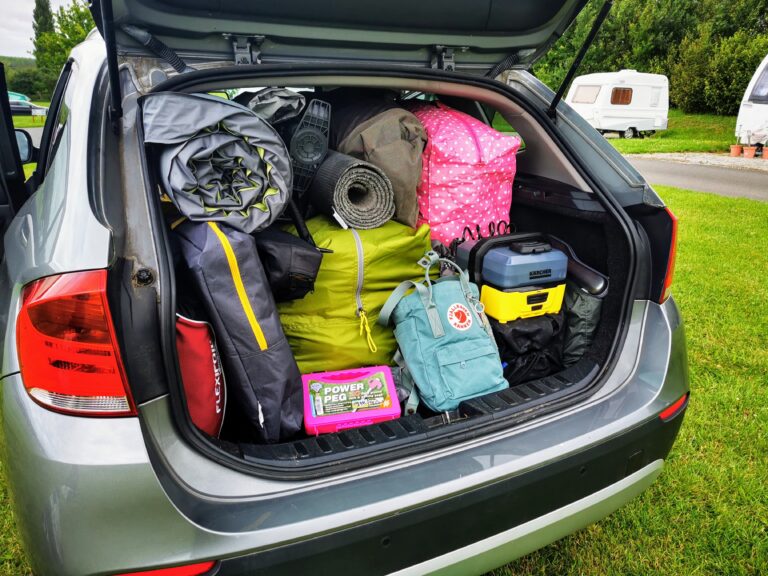
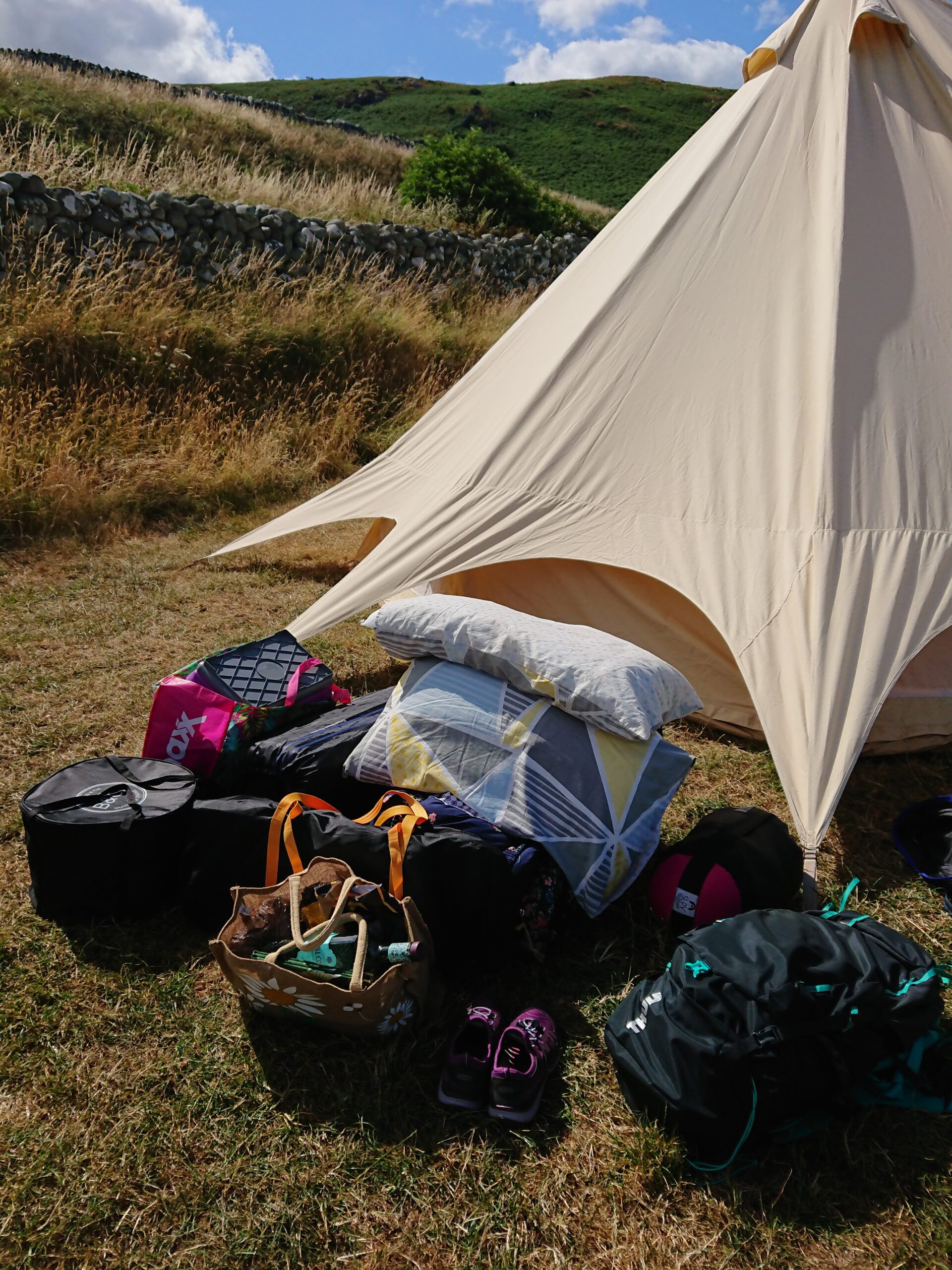
The trolley will trundle the boxes across the campsite, but it won’t hoist them into the boot at home or back out on arrival, and that lift is the bit that catches people out. Bend at the hips rather than the waist. Feet hip-width apart, bottom back, box tucked in close, then stand up with your legs rather than uncurling your back. Of course, two half-loads are easier than one heroic one, and I treat my trolley’s 50kg limit as a limit rather than something to aim for.
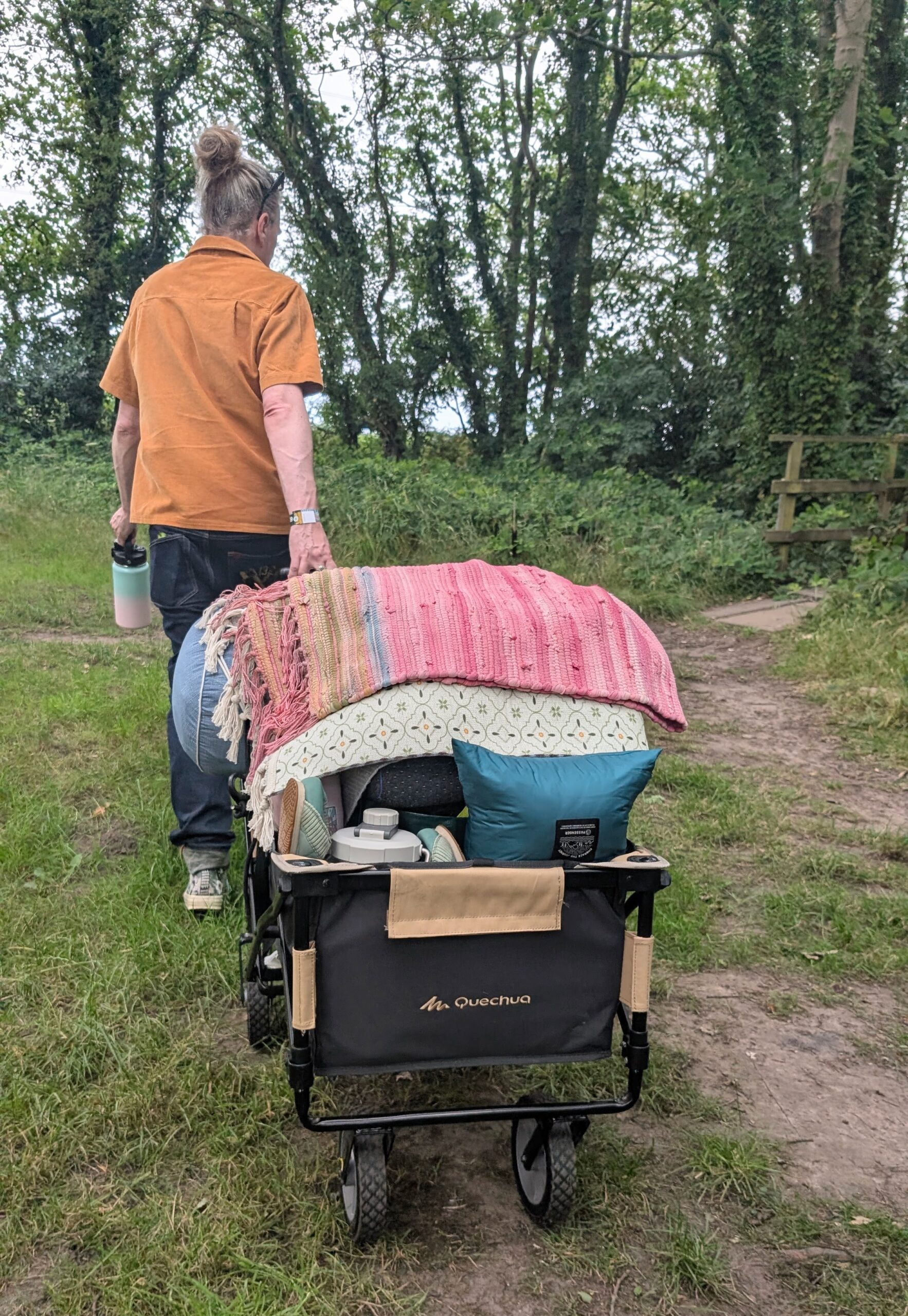
This is the least glamorous of the lot. A full water carrier in each hand, stand tall, and walk 20 to 30 metres up and down the garden. It works your grip, shoulders and back much the way the cool box does, and the neighbours will get used to it.
Getting up off the ground (and out of that low chair)
Camp chairs are low and tent floors are lower, and how far down they feel is mostly about the strength in your thighs, which a desk job like mine doesn’t help. Sit-to-stands work well, and they’re as simple as they sound. Sit on a kitchen chair, fold your arms, lower yourself slowly for a count of three and stand up briskly, 8 to 10 times, twice over, and getting out of a chair is one of the everyday tasks the Cochrane review found improved most. For the tent floor, practise getting up the way you’d get up from a picnic blanket. From sitting, roll onto one knee, hand on that knee, and push up to standing.
Then there’s balance, which nobody thinks about until a guy rope finds them in the dark. In one study of 1,702 people aged 51 to 75, around one in five couldn’t stand on one leg for 10 seconds, and the researchers note that balance tends to fall away quickly after the mid-50s. Try it whilst the kettle boils, 10 seconds a side with the worktop within reach, and build towards 30. It’s properly worth doing. A Cochrane review of 108 trials found that balance and functional exercises reduce the rate of falls in older people by 24%, which is not nothing when the camp loo is across a dark field. If you’d like more structure than a handful of moves, there’s a simple weekly strength plan for older adults worth a look in the strength section of huuman’s blog.
The first cold night (and why it’s always the worst one)
Sleep researchers have a name for that miserable first night in a tent, the first-night effect, and a brain-scan study found that in an unfamiliar place one half of the brain keeps a lighter, more watchful sleep than the other, a kind of night watch that stands down on the nights after. A tent, with its rustles and zips, is about as unfamiliar as it gets, so if night one is rough and night two is properly cosy, blame your brain, not your mattress.
The cold, at least, you can do something about. A review of sleep and temperature research says it plainly enough. In real life it’s bedding and clothing that protect sleep in the cold (the authors call them critical), and cold may be a bigger everyday problem than heat. So for a perpetually cold camper like me, the hot water bottle, the raised camp bed with a decent SIM on top and every layer from my how to stay warm in your tent tips are what get me through the night.
If, like me, you’re a poor sleeper, the same moves have a side effect. A review of 13 trials found that regular resistance exercise improves all aspects of sleep, with the biggest gain in sleep quality. Don’t expect one session the night before a trip to do it though. A few weeks of sit-to-stands and water carrier walks before a trip, on the other hand, should pay off after dark as well as at the boot of the car.
The day after
Eight loads and a fly sheet are more than most of us do in a normal week, and a review of muscle soreness research is pretty honest about what follows. Unfamiliar efforts bring on the soreness, and the lowering-down kind, like putting a box down on the floor, brings on the most. Exercise, kept gentle, is the most effective way to ease it, even if the relief is temporary, and new efforts are best introduced gradually over one or two weeks. In camping terms, that means starting the worktop moves a fortnight before the first trip, then a slow walk on the morning after pitching.
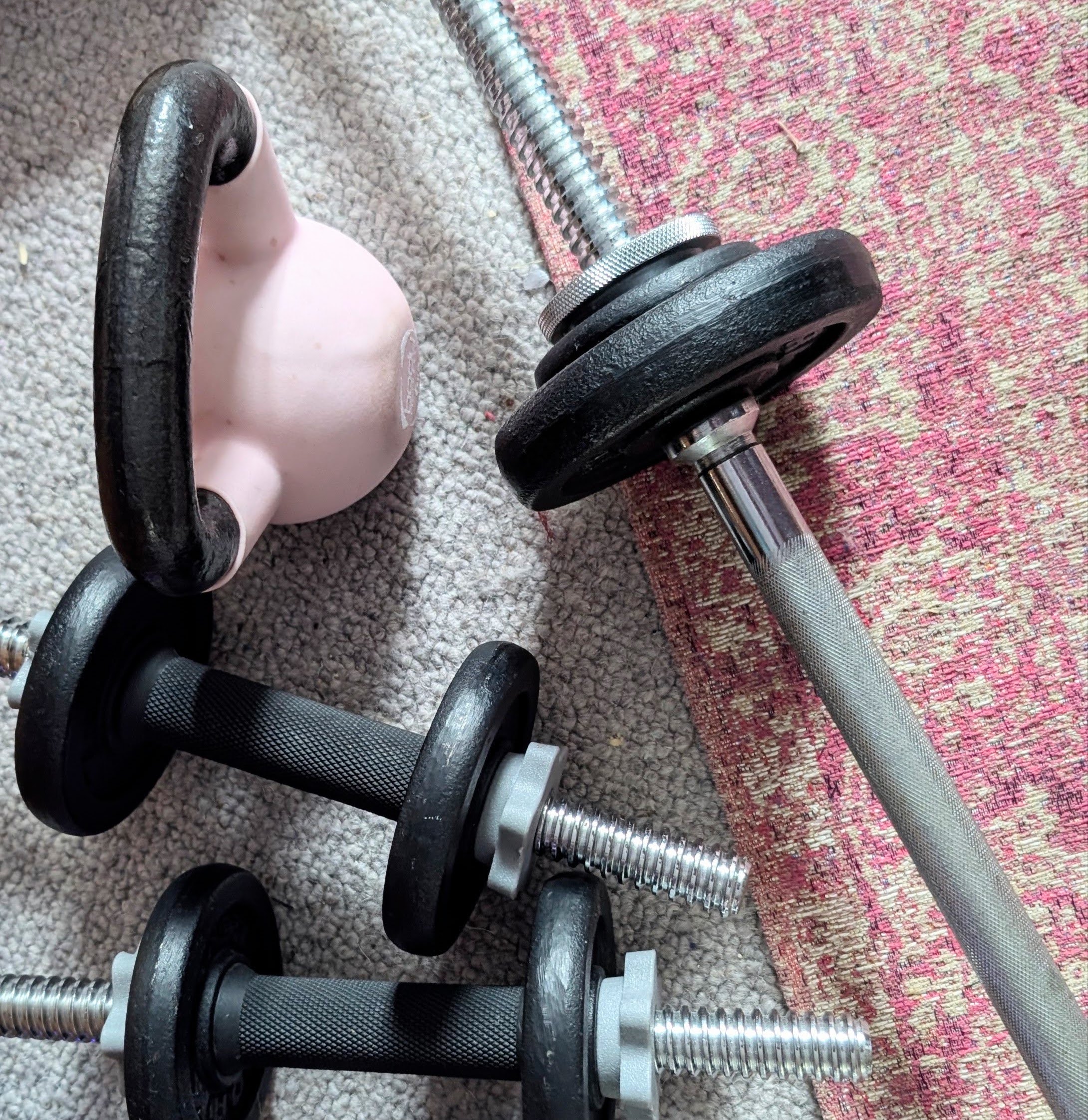
I’m not asking you to change how you camp. If you’d rather have someone else set the reps and decide when to go easy, a coaching app such as huuman, which adjusts the strength work to how you slept, will do that for you, and so will a good pilates or yoga teacher in person.
A gentle two-session week
Twice a week, around ten minutes, tucked in before or after the morning brew:
- Sit-to-stands, two lots of 8 to 10, slow down and brisk up
- Overhead press and worktop press-ups, two lots of 8 to 10
- Bend, lift and a 20 to 30 metre walk with two full water carriers
- One-leg stand whilst the kettle boils, 10 seconds a side, then a proper walk
As always, start small, and if you haven’t exercised for a while, the NHS suggests a word with your GP first. I’m inconsistent as all heck with this sort of thing, so one round of each is plenty in week one. People in the Cochrane trials mostly trained two or three times a week and worked hard when they did, so twice a week is genuinely enough, provided you go to the point of needing a breather, which is the NHS’s own yardstick.
Final thoughts
Trust me when I tell you comfort first is still the rule. The trolley, the camp bed and the hot water bottle are staying put. A couple of short sessions a week won’t change much, but those boxes are less of a faff and the camp chair feels a touch less like a hole in the ground.
The fly sheet will still need throwing over the top, but a shorter interpretive dance would happily do me!
Find out more
- Physical activity guidelines for adults aged 19 to 64, NHS
- Physical activity guidelines for older adults, NHS
- Progressive resistance strength training for improving physical function in older adults, Cochrane
- Exercise for preventing falls in older people living in the community, Cochrane
- Night Watch in One Brain Hemisphere during Sleep Associated with the First-Night Effect in Humans, Current Biology
- The effect of resistance exercise on sleep: A systematic review of randomized controlled trials, Sleep Medicine Reviews
DISCLOSURE | This post has been placed by a third party as part of an agreed brand collaboration.